Connect the input to the movement
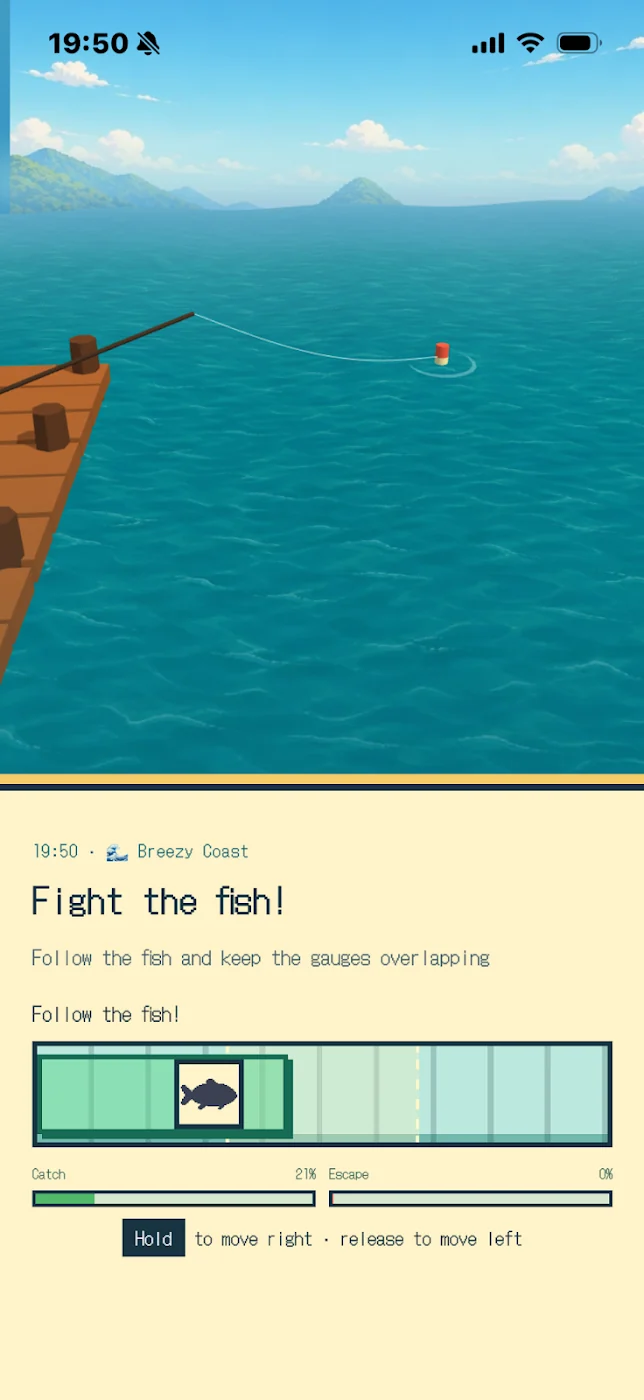
Read the opening instruction and watch what holding and releasing do. Resist the impulse to make a rapid series of changes before you have understood the first one. A control becomes easier to interpret when you can connect the input with the movement it produces.
The objective is not to find a universal timing formula. Follow the fish and the game’s feedback in the current attempt. A later situation may require a different response.
Keep the cue visible
Choose a grip that leaves the gauge and the fish zone in view. If your hand covers the feedback, adjust between attempts rather than trying to compensate while the action is happening. Read any available settings at a quiet moment, and keep sound or haptics at a comfortable level.
Those suggestions are about making the interface easier to observe. They do not guarantee a catch or replace the game’s instructions.
Read a missed attempt as information
After a miss, identify the part that felt unclear. Did you continue holding longer than intended? Did you lose track of the target while watching another part of the screen? Could you explain what your last input changed?
Choose one of those observations for the next attempt. Changing several habits at once makes it harder to learn which adjustment helped. Keep the goal small enough that you can recognise an improvement without needing a rare result.
Move on when the action makes sense
Once the basic relationship feels understandable, read the collection and equipment information. Decide what interests you next rather than assuming that a new purchase or location is necessary to enjoy the game.
The Fishing Days profile explains the base area and optional expansions. Our collection article offers a way to keep that longer project manageable. Both are editorial guidance based on official materials, not a claim of a tested optimum strategy.
Take this with you
Make a deliberate input, read its effect and change one habit at a time.